

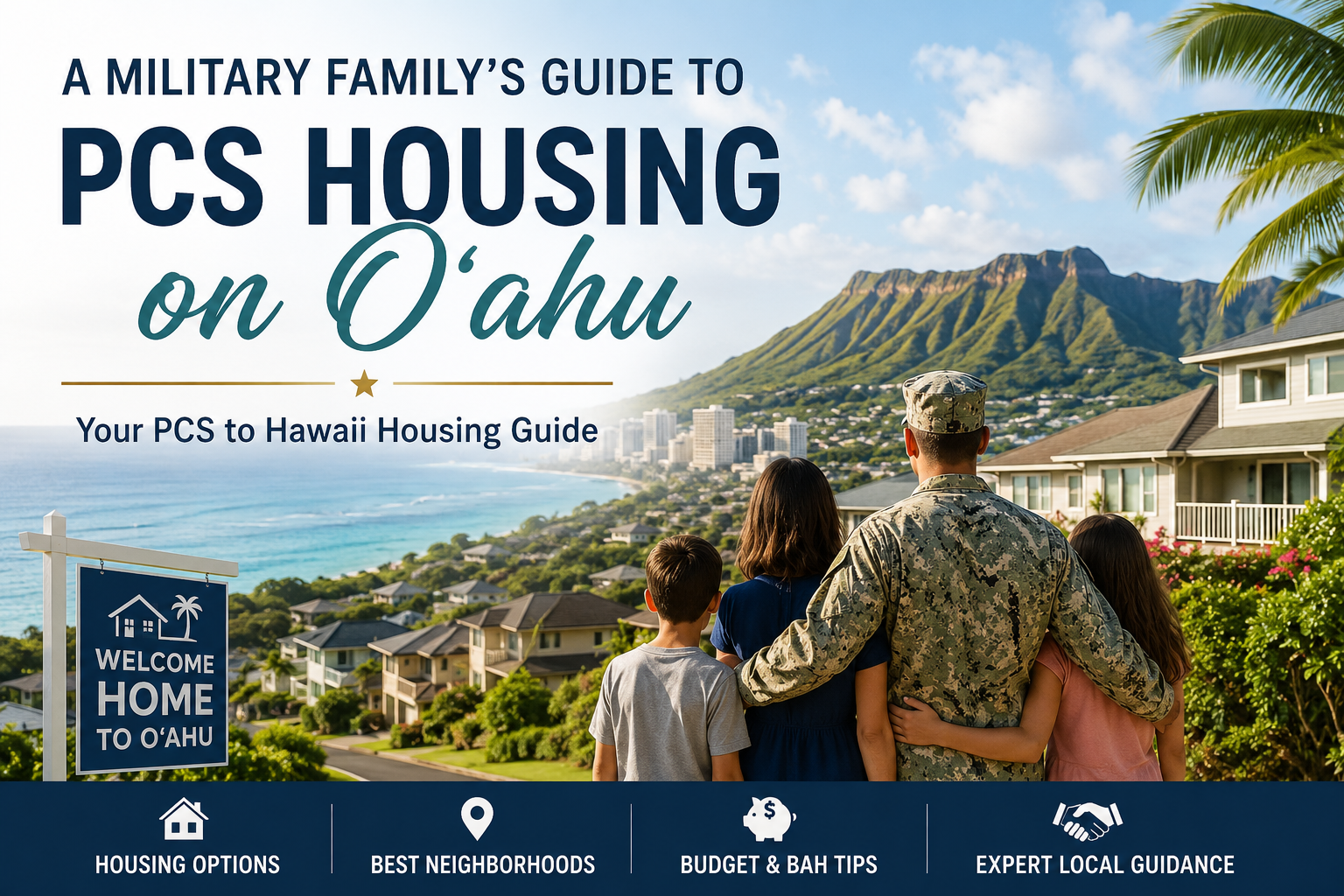
Relocating to O’ahu for a Permanent Change of Station is unlike any other military move. The logistics are more complex, the housing market is more competitive, and the cost of living is significantly higher than on the mainland. For military families arriving without a plan, finding a suitable home quickly can feel overwhelming. This PCS to Hawaii housing guide covers everything you need to know—from on-base versus off-base options to budgeting, neighborhoods, and the best time to start your search—so your family can settle in with confidence.
Understanding PCS Moves to Hawaii
What Is a PCS Move?
A Permanent Change of Station (PCS) is an official government-directed relocation to a new duty station. The military typically provides relocation benefits including a housing allowance, transportation of household goods, and travel pay. Timelines vary, but most families receive orders 30 to 90 days before their report date—which leaves little room for delay when you’re moving across an ocean.
Why O’ahu Is Different from Mainland Assignments
O’ahu presents a unique set of challenges. The island’s limited land area means housing inventory is tight, particularly near major installations. High demand from both military and civilian renters keeps prices elevated year-round. Add the elevated cost of living—groceries, utilities, and transportation all run higher than the national average—and it becomes clear why advance planning is non-negotiable.
Housing Options for Military Families on O’ahu
On-Base Housing
Living on base offers significant convenience: shorter commutes, built-in community, and access to base amenities like commissaries, fitness centers, and schools. However, on-base housing comes with waiting lists that can range from weeks to months depending on rank and family size. Eligibility requirements vary by installation, so confirm availability with your gaining unit as early as possible.
Off-Base Housing
Off-base living opens up a wider range of neighborhoods, home styles, and sizes. Many families prefer the flexibility of choosing their own community, especially those with school-age children or specific lifestyle needs. The tradeoff is navigating a competitive rental and real estate market without the built-in support structure of base housing.
Renting vs. Buying During a PCS
The decision to rent or buy depends on three main factors: your assignment length, financial goals, and likelihood of future relocation. Short tours (two to three years) typically favor renting. Longer assignments or those with investment goals may benefit from buying—especially given VA loan benefits available to eligible service members.
Best Areas to Live Near Major Military Installations
Near Joint Base Pearl Harbor-Hickam
Communities like Aiea, Pearl City, and Ewa Beach are popular with families stationed at JBPHH. These neighborhoods offer a mix of single-family homes and townhouses, good school access, and relatively manageable commute times. Ewa Beach, in particular, has seen significant residential development in recent years.
Near Schofield Barracks & Wheeler Army Airfield
Central O’ahu neighborhoods like Wahiawā and Mililani are natural fits for Army families. Mililani is consistently ranked among Hawaii’s most family-friendly communities, with strong schools, planned recreational areas, and a tight-knit atmosphere. Commute times to Schofield are typically short from both areas.
Near Marine Corps Base Hawaii (Kaneohe)
The Windward side of O’ahu—Kailua, Kaneohe, and Kahaluu—offers some of the island’s most scenic living. Lush mountains, calm bays, and a relaxed pace of life make it a favorite among Marines and their families. Rental inventory can be limited, so starting your search early is essential.
Near Camp Smith
Camp Smith sits above Halawa Heights with easy access to both Pearl Harbor and downtown Honolulu. Families stationed here often look in neighborhoods like Aiea, Halawa, and Salt Lake, which offer access to Honolulu’s dining, shopping, and cultural amenities without the full cost of urban living.
Budgeting for Your PCS Housing
Understanding BAH (Basic Allowance for Housing)
BAH is calculated based on rank, dependency status, and duty station ZIP code. O’ahu BAH rates are among the highest in the country, reflecting the island’s elevated housing costs. That said, BAH does not always cover the full cost of off-base housing in premium neighborhoods, so building a realistic budget is critical.
Additional Housing Expenses
Beyond rent or mortgage, Hawaii housing costs often include HOA fees (common in many planned communities). These utilities run higher due to the island’s energy costs, security deposits, pet fees, and parking charges in urban areas. Budget an additional 15–20% on top of your base housing cost to account for these expenses.
Hawaii Cost of Living Tips
Groceries cost roughly 30% more than the mainland average. Transportation adds up quickly if your household has multiple vehicles. Factoring these costs into your overall relocation budget—before you sign a lease or purchase contract—will save you stress down the line.
Buying a Home During Your Hawaii PCS
When Buying Makes Sense
Purchasing a home makes the most financial sense for service members with assignments of three or more years, or those planning to retain the property as a rental after relocation. O’ahu’s historically strong real estate market has made homeownership an attractive long-term investment for many military families.
VA Home Loan Benefits
Eligible veterans and active-duty service members can use a VA home loan to purchase with no down payment, competitive interest rates, and reduced closing costs. These benefits make homeownership more accessible in a high-cost market like O’ahu, where entry-level home prices remain well above national averages.
Working with a Local Military-Friendly Realtor
A realtor with military relocation experience understands compressed timelines, remote purchasing, and the specific needs of PCS buyers. Virtual tours, remote contract signings, and coordinated closings are all standard practice for qualified local agents—giving you the ability to secure a home before you ever set foot on the island.
Renting During Your PCS Assignment
Lease Agreements and Military Clause Protections
Under the Servicemembers Civil Relief Act (SCRA), military renters are entitled to terminate a lease early if they receive PCS orders. Confirm that your lease includes a military clause before signing, and retain a copy of your orders throughout your tenancy.
Finding Rental Homes Quickly
Start your search 60 to 90 days before your report date. Use military relocation networks, local property management companies, and trusted online platforms to identify options. Virtual showings are widely available and allow you to evaluate properties remotely before committing.
Questions to Ask Before Signing
Clarify which utilities are included, whether parking is available (and at what cost), the pet policy, and who is responsible for maintenance and repairs. Getting answers in writing prevents disputes later.
Preparing Before Your Move to O’ahu
Build a PCS Timeline
- 90–120 days out: Request housing through your installation’s housing office, begin your off-base search, and research neighborhoods near your duty station.
- 60 days out: Confirm shipping timelines for household goods, schedule virtual property tours, and finalize your housing decision.
- Final weeks: Arrange temporary lodging if needed, gather required documents, and coordinate your arrival with your gaining unit.
Documents You’ll Need
Have copies of your orders, military ID, financial documents, proof of income, and pet records readily accessible. Landlords and lenders on O’ahu may request these early in the process.
Tips for a Smooth Military Relocation
- Begin your housing search as early as your orders allow
- Research commute times to your installation from multiple neighborhoods
- Consider school district quality if you have school-age children
- Check flood zone maps—some O’ahu neighborhoods carry elevated flood risk
- Schedule virtual showings before arrival to avoid making rushed decisions on the ground
- Stay flexible during peak PCS season (typically May through August), when competition for housing intensifies
- Work with professionals who specialize in military relocations
Why Local Expertise Matters
O’ahu’s housing market moves quickly and has quirks that out-of-state buyers and renters often don’t anticipate. A local real estate professional with military relocation experience brings knowledge of current inventory, neighborhood-specific pricing trends, and the logistical ability to guide remote transactions. From coordinating inspections while you’re still on the mainland to negotiating terms that align with your timeline, the right local expert reduces friction at every step.
Every PCS Move Is Manageable With the Right Plan
No two PCS moves are identical, but the families who navigate O’ahu’s housing market most successfully share one thing in common: they start planning early. Understanding your housing options, knowing your budget, researching neighborhoods, and working with professionals who know the island makes an enormous difference in how smoothly your transition unfolds. Reach out to a local military-friendly real estate expert today to get personalized guidance for your specific assignment, timeline, and housing goals.
FAQs
Ans: – Start as early as 90 to 120 days before your report date. O’ahu’s rental and real estate inventory moves quickly, and earlier searches give you more options and better negotiating leverage.
Ans: – Both have real advantages. On-base housing offers convenience, community, and shorter commutes, but waiting lists can be long. Off-base living provides more neighborhood flexibility and home variety, though it requires more active budgeting and planning.
Ans: – Yes. Service members with longer assignments or investment goals often use VA home loan benefits to purchase on O’ahu. Working with a military-experienced local realtor makes remote transactions significantly more manageable.
Ans: – O’ahu BAH rates are among the highest in the U.S. and cover a significant portion of housing costs. However, BAH may not fully cover premium neighborhoods or homes with high HOA fees, so budgeting carefully for additional expenses is important.
Ans: – Ewa Beach and Pearl City are popular near Joint Base Pearl Harbor-Hickam. Mililani and Wahiawā attract families near Schofield Barracks. Kailua and Kaneohe are favorites on the Windward side near MCBH. Each area offers a distinct lifestyle and commute profile.


Comments are closed