

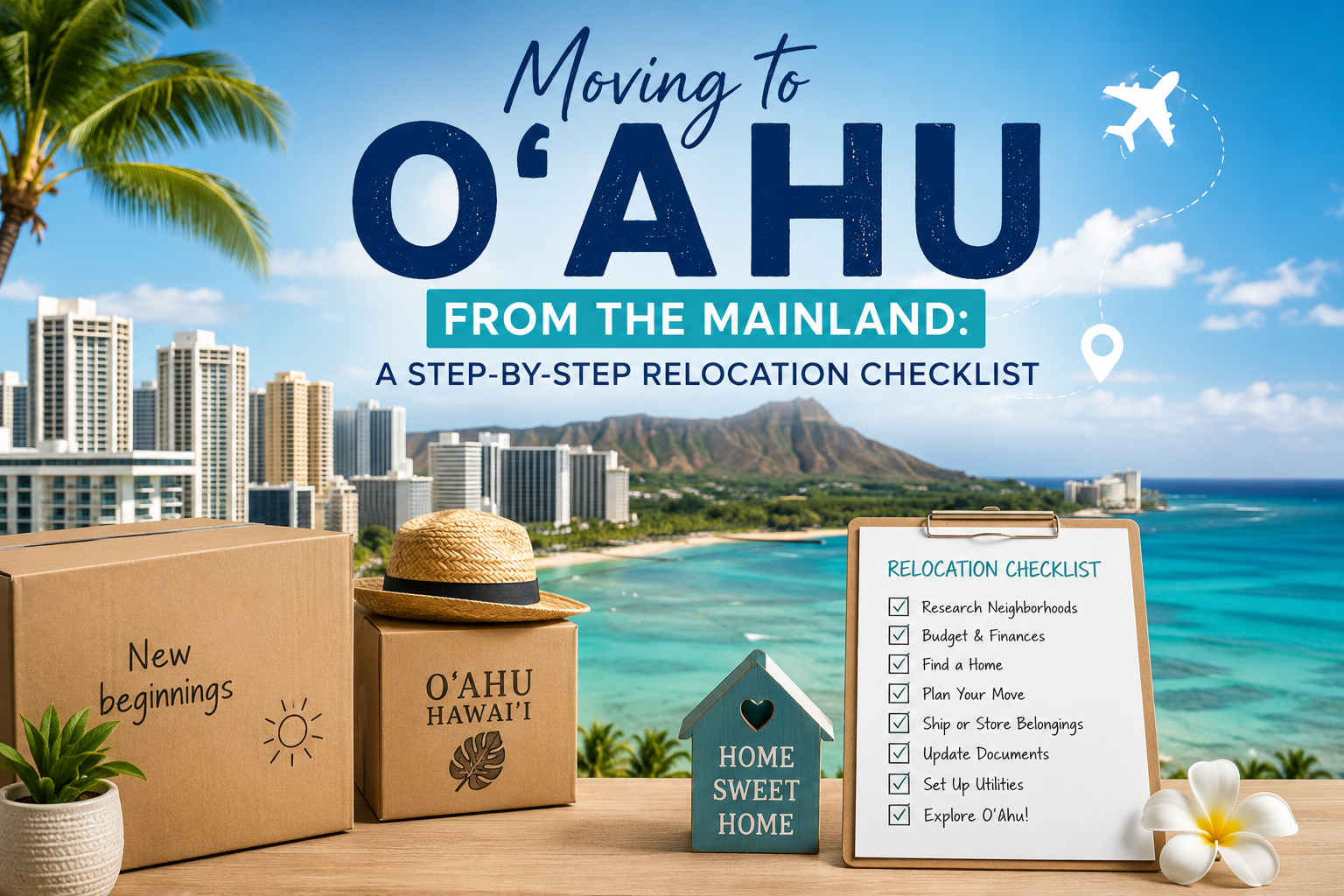
Thousands of people relocate to O’ahu every year, drawn by its tropical climate, stunning coastlines, and a lifestyle that’s hard to find anywhere else on the planet. But moving to O’ahu from the mainland is a fundamentally different experience than a standard cross-country move. The Pacific Ocean separates you from everything familiar—and the logistics, costs, and housing market reflect that.
Proper planning isn’t optional here. It’s the difference between a smooth transition and a stressful, expensive one. Whether you’re purchasing a home, renting, or still in the research phase, this step-by-step checklist covers everything you need to know before making the move.
Why People Are Moving to O’ahu
The appeal is real and wide-ranging. O’ahu offers year-round tropical weather, world-class beaches, and a deeply rooted sense of community that mainland cities rarely replicate. Employment opportunities span hospitality, healthcare, tech, and government sectors. Military relocations account for a significant share of new arrivals each year, and the rise of remote work has opened the door for professionals who no longer need to be tied to a specific city.
Add hiking trails, surf breaks, and a multicultural food scene, and it’s easy to see why so many people leap.
Step 1: Research O’ahu Neighborhoods Before You Move
Consider Your Lifestyle
O’ahu isn’t one-size-fits-all. Honolulu and Waikiki offer urban energy—walkable streets, nightlife, and convenience. Kailua and Lanikai attract those who want a quieter, beach-town feel. Families often gravitate toward communities like Mililani or Hawaii Kai for their school quality and suburban amenities. Researching neighborhoods early helps you avoid the common mistake of landing in an area that doesn’t match your day-to-day needs.
Commute Times Matter
O’ahu’s traffic can be surprisingly heavy, particularly around the H-1 freeway corridor during peak hours. If you’re working in Honolulu but considering a home on the North Shore, factor commute time heavily into your decision. Public transit exists but is limited compared to mainland cities. Remote workers have more flexibility, though internet reliability varies by neighborhood.
Compare Cost of Living by Area
Housing costs differ meaningfully across the island. Urban Honolulu condos are priced differently than single-family homes in Ewa Beach or Kapolei. Running side-by-side comparisons before committing to a neighborhood helps you stretch your budget without sacrificing location.
Step 2: Understand the O’ahu Housing Market
O’ahu’s real estate market is competitive and unlike anything most mainland buyers have encountered. Median home prices consistently rank among the highest in the nation. Inventory is tight, and properties move quickly.
One critical distinction to understand: the difference between fee simple and leasehold properties. Fee simple means you own the land outright. Leasehold means you own the structure but lease the land from a landowner—often at costs that increase over time. Many buyers from the mainland overlook this distinction until it creates financing complications. [Learn more about leasehold vs. fee simple properties here.]
Condo living is common on O’ahu, and HOA fees can be substantial. [Understanding HOA fees] before you budget is essential—these costs significantly affect your monthly obligations and long-term affordability.
Working with a knowledgeable local Realtor isn’t just helpful here. It’s genuinely necessary.
Step 3: Create Your Relocation Budget
Relocating across the Pacific is expensive. Building a realistic budget early prevents surprises later. Key costs to account for include:
- Shipping household belongings (costs vary by volume and method)
- Vehicle transportation (shipping a car from the West Coast typically runs $1,000–$2,000+)
- Flights for yourself and family members
- Temporary housing while your home purchase closes or your rental becomes available
- Security deposits and utility setup fees
- Home purchase closing costs (typically 2–5% of the purchase price in Hawaii)
- Emergency fund for unexpected costs during the transition
Build in a buffer. Things rarely go exactly to plan during an international relocation.
Step 4: Decide What to Ship and What to Leave Behind
Furniture
Shipping large furniture items across the Pacific can cost more than replacing them locally. Evaluate each piece honestly. IKEA has a Honolulu location, and there are quality secondhand markets on the island.
Vehicles
Most people ship at least one vehicle. Allow 2–4 weeks for shipping from the West Coast, and longer from the East Coast. Book shipping early—capacity fills up.
Appliances
Many O’ahu homes and condos come equipped with appliances. Confirm before shipping yours across the ocean.
Electronics
Electronics generally travel well, but the humid climate can affect certain equipment over time. Invest in proper storage and protective cases.
Step 5: Secure Financing Early
Hawaii’s lending market has its own nuances. Leasehold properties, for instance, are harder to finance—many lenders won’t touch them. Get pre-approved before you start shopping, so you know exactly what you can afford and can act quickly when the right property appears.
Down payment requirements vary by loan type, but having 20% ready gives you the most flexibility in O’ahu’s competitive market. Work with a lender who has Hawaii-specific experience. Timelines can run longer than mainland transactions, so starting early matters.
Step 6: Plan an In-Person or Virtual Home Tour
Buying property sight unseen is risky anywhere. On O’ahu, it requires extra caution. A local Realtor can conduct video walkthroughs, provide detailed inspection reports, and give you honest, on-the-ground context that listings simply can’t capture.
If an in-person trip is possible before closing, take it. Even a few days on the island to tour properties and neighborhoods is worth the cost.
Step 7: Organize Important Documents
Gather and digitize the following before your move:
- Driver’s license and passport
- Medical and dental records
- School records (for children)
- Insurance policies
- Banking and financial account information
- Employment paperwork
- Mortgage documents and loan disclosures
Store digital backups in a secure cloud location accessible from anywhere.
Step 8: Prepare for Island Living
Groceries cost more on O’ahu than on the mainland—sometimes significantly more. Utilities, particularly electricity, run higher than national averages. Budgeting for these ongoing costs upfront avoids unpleasant surprises in month two.
Beyond finances, there’s a cultural adjustment. O’ahu has a distinct local culture rooted in Native Hawaiian traditions and the values of Aloha. Newcomers who approach the island with humility and genuine curiosity tend to integrate far more successfully than those who arrive with mainland assumptions.
Hurricane season runs June through November. Knowing your property’s flood zone status and securing appropriate insurance coverage before the season starts is smart preparation.
Step 9: Update Your Address and Essential Services
Before moving week arrives, work through this checklist:
- USPS mail forwarding
- Banks and credit card providers
- Insurance providers (health, auto, home)
- Employer HR records
- Children’s schools
- DMV (Hawaii requires you to register your vehicle and obtain a Hawaii license within 30 days of establishing residency)
- Voter registration
- Streaming services and subscriptions
Step 10: Work with a Local O’ahu Real Estate Expert
A local Realtor provides far more than access to listings. The right expert brings neighborhood-level insight, knowledge of off-market opportunities, and negotiation experience specific to Hawaii’s market dynamics.
They can also coordinate inspections, recommend trusted local contractors, and support you through every stage—from your first property search to well after closing. For mainland buyers navigating a market this different from what they know, that guidance is invaluable.
Common Mistakes to Avoid When Moving to O’ahu from the Mainland
- Waiting too long to secure housing—inventory moves fast
- Underestimating shipping timelines for belongings and vehicles
- Ignoring HOA fees when calculating monthly costs
- Skipping neighborhood research and regretting the location
- Bypassing home inspections to speed up closing
- Assuming mainland pricing for groceries, utilities, and services
- Failing to arrange temporary housing before your permanent place is ready
- Not building an adequate buffer into your relocation budget
Moving Timeline Checklist
3–6 Months Before
- Research neighborhoods and determine your priorities
- Hire a local O’ahu Realtor
- Obtain mortgage pre-approval
- Create a detailed relocation budget
- Get quotes from moving and shipping companies
2 Months Before
- Book your moving company
- Arrange vehicle shipping
- Begin downsizing—donate, sell, or store what you won’t bring
- Schedule home inspections if under contract
1 Month Before
- Transfer or set up utilities
- Forward mail through USPS
- Finalize your home purchase
- Confirm all travel plans
Moving Week
- Pack a dedicated essentials bag (documents, medications, chargers, valuables)
- Verify shipping schedules and tracking
- Complete all final paperwork
- Prepare your arrival-day checklist
Start Your O’ahu Relocation on the Right Foot
Moving to O’ahu from the mainland is one of the most significant life decisions a person can make. Done right, it opens the door to an extraordinary way of life. Done without preparation, it can become an expensive and stressful ordeal.
Following a structured checklist dramatically reduces that risk. Starting your research early, understanding Hawaii’s unique real estate market, and partnering with an experienced local professional will put you in the strongest possible position before you ever step off the plane. Ready to start your relocation plan? Connect with a local O’ahu real estate expert today and get the guidance you need to make your move with confidence.
FAQs
Ans: – Moving to O’ahu requires significantly more planning than a typical stateside relocation. Shipping logistics, Hawaii-specific real estate rules, and a higher cost of living all add complexity. With proper preparation and local guidance, the process is manageable.
Ans: – Total relocation costs vary widely depending on how much you’re shipping, your housing situation, and whether you’re buying or renting. Between shipping, flights, temporary housing, and home purchase closing costs, budgeting $10,000–$30,000+ for the relocation itself (separate from your home purchase) is a reasonable starting point.
Ans: – Yes, if at all possible. Touring neighborhoods in person gives you context that photos and virtual tours simply can’t provide. Even a short visit before closing can prevent a costly mismatch between expectations and reality.
Ans: – It depends on the value and size of what you own. Large, heavy pieces often cost more to ship than to replace locally. Smaller, high-value items are usually worth bringing. Get shipping quotes early and compare them against local replacement costs before deciding.
Ans: – Gather your passport, driver’s license, medical and school records, insurance policies, financial account information, employment paperwork, and all mortgage or lease documents. Digitize everything and store secure backups in the cloud.


Comments are closed